
The “Termination Clause” Trap: Why Your Ontario Employment Contract Might Be Illegal in 2026
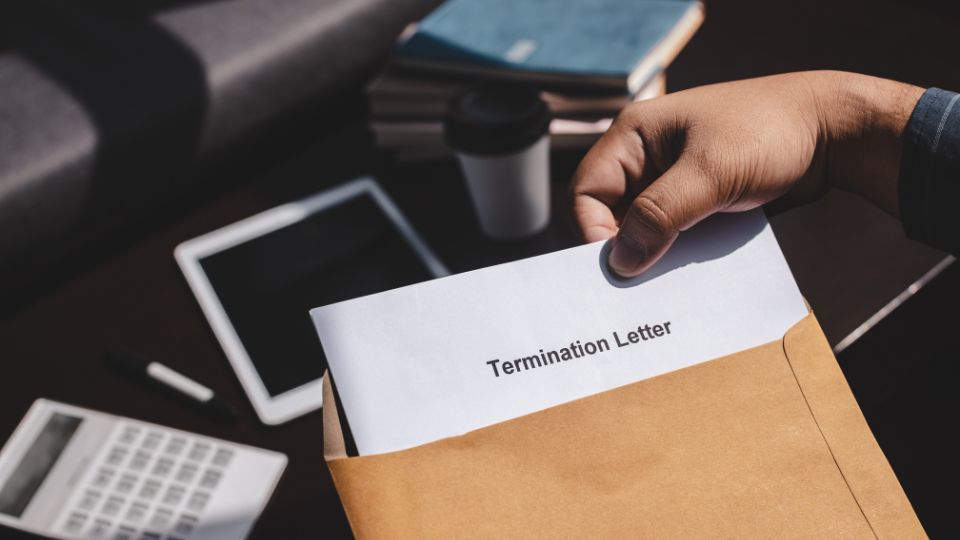
You probably remember the day you were hired. There was the excitement of the new role, the flurry of HR emails, and that thick stack of paperwork you signed in a caffeinated haze. Tucked away on page 14 was a paragraph titled “Termination.” At the time, it felt like a formality—something you’d never actually need to worry about.
Fast forward to today: you’ve been handed a termination letter. Your HR manager points to that same paragraph and says, “As per your contract, we are only required to pay you the ESA minimums. Here is your two weeks’ pay. Good luck.”
Here is the secret that most Ontario employers won’t tell you: There is a very high probability that the paragraph they are pointing to is legally worthless. In 2026, the legal landscape for “wrongful dismissal” in Ontario has shifted dramatically. Courts are increasingly siding with employees, striking down restrictive contracts that were once considered “standard.” If you’ve been let go, using the tool at MySeveranceCalculator.com is your first step in realizing that the “fine print” you signed years ago might not be the ironclad barrier your boss claims it is.
The Rise of the “Unenforceable” Clause
In Ontario, “Wrongful Dismissal” doesn’t necessarily mean you were fired for a bad reason. It usually means you weren’t given reasonable notice (or pay in lieu of that notice).
Most employers try to “contract out” of the generous Common Law notice periods (which can be months) by putting a clause in your contract that limits you to the bare minimums of the Employment Standards Act (ESA).
Edwards Pollard LLP
However, Ontario courts have become increasingly strict. If a termination clause is even slightly off—if it misses a single benefit, misinterprets a regulation, or uses ambiguous language—the entire clause is often thrown out. When that happens, the “minimums” vanish, and you are suddenly entitled to the much higher “Common Law” severance.
The 2025-2026 Legal Shifts: What’s Changed?
As we move through 2026, several key legal developments have made it even harder for employers to limit your severance:
1. The “At Any Time” Controversy (Baker v. Van Dolder)
Recent 2025 rulings (like Baker v. Van Dolder’s Home Team Inc.) have sent shockwaves through HR departments across the GTA. Judges have ruled that clauses allowing an employer to fire someone “at any time” might be illegal because they imply the employer can bypass the specific protections offered by the ESA (such as anti-reprisal rules). If your contract says your boss can end your employment “at any time and for any reason,” you might be sitting on a goldmine of unpaid severance.
Harper Grey LLP+ 1
2. The “Waksdale” Legacy and Federal Expansion
A few years ago, the Waksdale ruling established that if any part of a termination clause (even the “for cause” part) violates the law, the entire termination section is void. In late 2025, we saw this logic expand to federally regulated employees (like those in banking or telecommunications). Even if you work for a major bank or a national airline, your contract is now under the same microscope as a local tech startup.
Hicks Morley+ 1
3. The Working for Workers Acts (Bill 149 & Bill 30)
New legislation in 2024 and 2025 has introduced stricter transparency. For example, as of January 1, 2026, new pay transparency rules and requirements for “group termination” notices mean employers are being held to a higher standard of conduct. If they failed to follow these new administrative steps during your layoff, it adds further weight to a wrongful dismissal claim.
Cassels
How to Spot a “Broken” Clause
You don’t need a law degree to spot the red flags in your own contract. If you see any of the following, your “minimum” package is likely negotiable:
- Silence on Benefits: Does the contract mention “base salary” but forget to mention that your health dental, and disability benefits must continue during the notice period? If it stays silent on benefits, the clause is likely void.
- “For Cause” Overreach: Does the contract say they can fire you for “cause” without pay for minor mistakes? The ESA has a very high bar for “wilful misconduct.” If the contract sets a lower bar than the law, the whole thing could be struck down. Bennett Jones
- Ambiguity: If a sentence can be read in two ways—one that follows the law and one that doesn’t—Ontario courts almost always choose the version that benefits the employee.
The Math of a “Broken” Contract
Let’s look at the real-world impact. Suppose you are 52 years old, worked as a Project Manager in Mississauga for 12 years, and earn $100,000.
- The “Contract” Offer: Your employer says the contract limits you to the ESA minimum. They offer you 12 weeks of pay (approx. $23,000).
- The “Common Law” Reality: If your contract clause is found to be illegal (which many are), a court might award you 12 to 15 months of pay. That’s $100,000 to $125,000.
The difference isn’t just a few thousand dollars; it’s the equivalent of a year’s salary. This is why the Ontario Severance Pay Calculator is so vital. It doesn’t just look at what your employer wants to pay; it looks at what the law demands they pay when their paperwork fails them.
The Emotional Tactic: “We’re Doing You a Favor”
Employers often wrap a subpar offer in “kindness.” They might offer an extra week of pay “out of the goodness of our hearts” or offer “outplacement services” as a gift.
While these are nice, they are often used to distract you from the fact that you are being asked to sign a Full and Final Release. Once you sign that release, you lose the right to challenge your contract. You are effectively saying, “I agree that the $23,000 you gave me is enough, even if I was actually owed $125,000.”
What Should You Do? (The 2026 Strategy)
If you have been terminated in the GTA or anywhere in Ontario this year, follow this checklist:
- Stop and Breathe: Do not sign the offer in the room. You are legally entitled to take it home and review it.
- Use the Calculator: Head to MySeveranceCalculator.com. Input your data and see the “Common Law” estimate. If the gap between the offer and the estimate is large, you have a problem (and an opportunity).
- Check for “Severance Improvement”: The team at Randy Ai Law Office uses a Severance Improvement Program™. This is specifically designed to identify “broken” contracts and negotiate higher settlements without the need for a long, drawn-out court battle. Toronto Employment Lawyer | Severance Pay Experts
- Look Beyond Salary: In 2026, compensation is complex. Does your package include the loss of your car allowance? Your RRSP matching? Your annual bonus that was due next month? A fair severance package accounts for total compensation, not just the number on your bi-weekly check.
Conclusion: You Have More Power Than You Think
The relationship between an employer and an employee is rarely equal, especially at the moment of termination. Employers have HR departments and legal teams; you have a cardboard box of your desk belongings and a PDF of an offer.
But the law in Ontario acts as a “great equalizer.” It assumes that employment contracts are lopsided and, as a result, it holds employers to a standard of near-perfection. In 2026, most contracts simply don’t meet that standard.
Before you accept a “minimum” package, realize that the law is likely on your side. Use the Ontario Severance Pay Calculator to arm yourself with the facts, and don’t let an “illegal” contract dictate your future.
Was your termination clause drafted correctly? Most aren’t. Get your free, confidential estimate now at MySeveranceCalculator.com and see what you are truly owed.
Is your severance offer based on the “minimum” or the “common law” standard?